
Donald Trump’s Nobel Peace Prize: Why His Global Peacemaker Dreams Remain Distant
Explore why Donald Trump’s efforts for the Nobel Peace Prize, especially in the Russia-Ukraine conflict, remain unfulfilled. Analyze his diplomatic ambitions, summit setbacks, and why his quest for global recognition faces tough realities.
 Amar Kant Srivastava
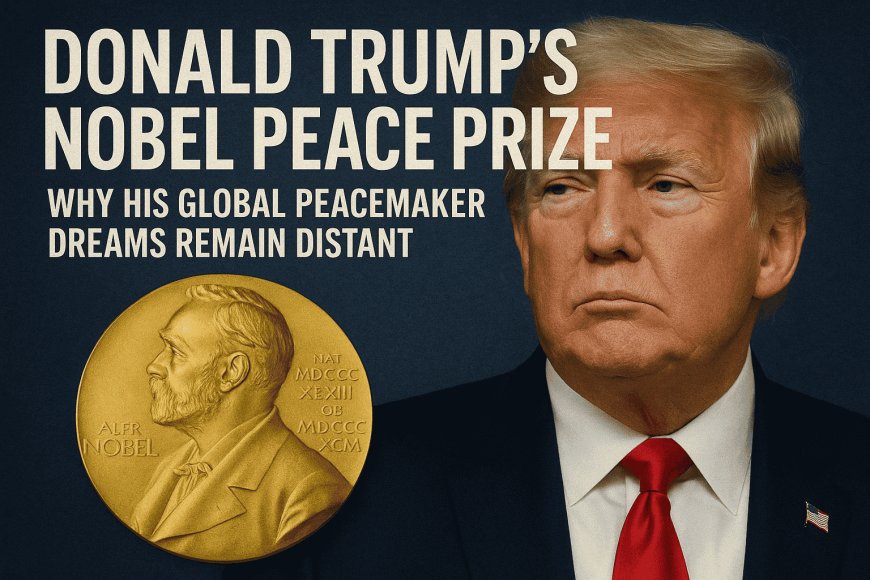
Donald Trump has long pursued global recognition as a peacemaker, aiming to secure the coveted Nobel Peace Prize. His supporters often point to high-profile diplomatic efforts and previous wins like the Abraham Accords during his first term as evidence of his peacemaking credentials. However, recent developments—particularly his floundering attempt to broker peace between Russia and Ukraine—highlight the gulf between Trump’s ambitions and actual results.
Trump’s Nobel Peace Prize Ambitions
Trump has made no secret of his desire to join the ranks of iconic Nobel laureates such as Nelson Mandela and Jimmy Carter. His quest hinges on pushing major global ceasefires and securing high-visibility peace deals. Most recently, Trump attempted to position himself as the key mediator in the Russia-Ukraine conflict, hoping a successful resolution could cement his legacy and put the Nobel Prize within reach.
The Alaska Summit: High Hopes, Low Results
Ten days ago, Trump hosted Russian President Vladimir Putin in a much-publicized summit in Alaska, billed as a major diplomatic breakthrough. He claimed the meeting would lead to a trilateral summit with Ukrainian President Volodymyr Zelensky, setting the stage for a historic peace agreement. Yet, the reality quickly unraveled.
-
No concrete agenda was set at the summit.
-
Both sides accused each other of sabotaging talks.
-
Russia, via Foreign Minister Sergei Lavrov, asserted no deal with Zelensky was on the table, while Ukraine accused the Kremlin of deliberate obstruction.
Escalation Overshadows Diplomacy
Rather than progress towards peace, the past week saw intensified Russian drone and missile strikes on Ukrainian cities—including an attack on a US-owned electronics plant—as well as hardened positions from both Moscow and Kyiv. Putin’s demands revolve around Ukraine surrendering the Donbas region, abandoning NATO aspirations, and agreeing to neutrality—a set of conditions Zelensky fully rejects. European leaders also caution that any concessions could merely fuel future Russian aggression.
Trump’s Track Record: Optics Over Outcomes?
Trump’s approach draws criticism for focusing on spectacle rather than substance. His pattern is clear: initiate high-profile interventions, assert credit for peace, but ultimately leave deep-rooted conflicts unresolved. This strategy was also visible in his claims regarding India-Pakistan tensions, where India refuted his role and attributed de-escalation to Pakistan’s own military request.
The Hard Reality: Why Trump’s Nobel Remains Elusive
The continuing Russia-Ukraine war illustrates a central challenge: peace cannot be secured by declarations or optics alone. Both sides remain entrenched, and Trump’s artificial deadlines—for example, demanding Putin accept peace terms by August 8—do little to change the facts on the ground. Instead, experts note rising violence and diplomatic deadlock, with Ukraine calling for increased Western support, not concessions.
Conclusion: Nobel Fantasy vs. Diplomatic Reality
Donald Trump’s pursuit of the Nobel Peace Prize—especially regarding the Russia-Ukraine conflict—continues to be undermined by lack of tangible results. While his supporters celebrate past diplomatic moments like the Abraham Accords, critics argue these deals were more about formalizing existing trends than resolving active wars.
The core issue is clear: Trump’s bid to be remembered as a global peacemaker faces the immutable truth that lasting peace requires more than high-profile summits and headlines. Until genuine progress emerges in conflicts like Russia-Ukraine, Trump’s Nobel Peace Prize will remain an aspiration built on wishful thinking, not diplomatic achievements.